
Discarded Diagnosis: Neurasthenia and nervous disorder
11 Nov 2026
Téa-Anya Earle
In 1887, Charlotte Perkins Gilman, after a protracted illness characterised in her own words as “a severe and continuous nervous breakdown tending to melancholia”, approached a leading neurologist of the time, Silas Weir Mitchell, for treatment. As a prominent physician and specialist in nervous disorders, Weir was actively prescribing rest cures to ailing women. He proposed this as a treatment for her disorder, which he identified under the blanket term of ‘neurasthenia’. Under the doctor’s orders, she was restricted from any activity that might exhaust her finite nervous supply. She was to remain on bed rest, avoid any intellectual activity and follow a restorative diet until her reserves were replenished.
The treatment was not a success. Under this strict regime and forced to remain in one room of the house indefinitely, she began losing her grasp on reality within months. Gilman later recounted this episode of her life in the feminist classic “The Yellow Wallpaper” published in 1892. She intended this as a cautionary tale against the prescription of rest cures, but also against the overbearing influence of male doctors and husbands championing repressive treatments.
From the late nineteenth century to the early twentieth century, neurasthenia was arguably one of the foremost diagnoses within the realms of neurotic illness and nervous disorders. Neurasthenic ideas were widely disseminated globally throughout this period. Interestingly, however, by the 1952 release of the first edition of the Diagnostic and Statistical Manual of Mental Disorders (DSM-1), neurasthenia seems to have fallen out of favour and is mentioned just once. In the Definition of Terms section under Psychophysiologic nervous system reaction, neurasthenia is referred to as an obsolete medical term: “The terms include many cases formerly called ‘neurasthenia’.”
We hold several publications on neurasthenia in the RCS England Library collection, including a wealth of literature on diseases of the nervous system which provide a vital record of early and pre- twentieth century neurology.
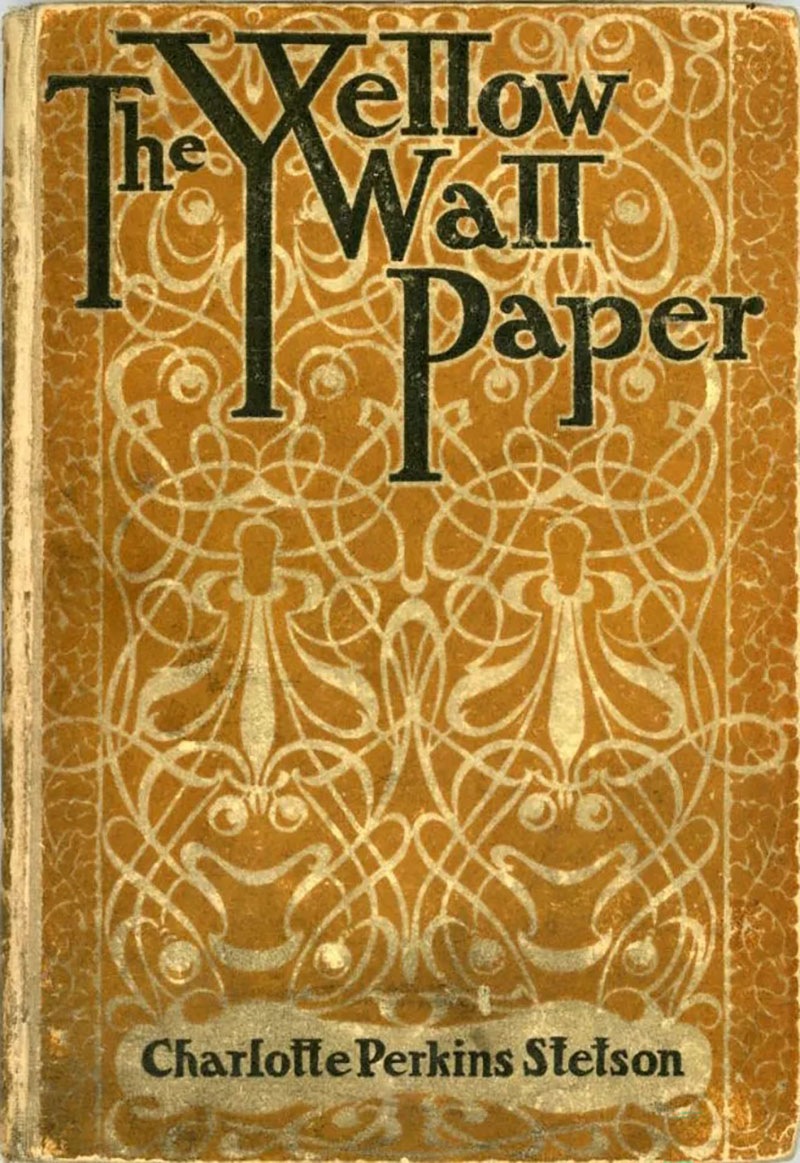
Front page of the 1899 edition of “The Yellow Wallpaper” by Charlotte Perkins Gilman (formerly known as Stetson).
Neurasthenia is a diffuse term for nervous exhaustion or a lack of nervous energy. American neurologist George Miller Beard’s popularisation of the term from 1869 built on at least a century of frameworks about neurotic illness. The medical term neurasthenia emerged from a much longer history of what physicians called “nervous disorders”.
This can be traced back to works like Edward Jorden’s A Brief Discourse of a Disease Called the Suffocation of the Mother (1603), a treatise that challenged supernatural explanations for symptoms associated with hysteria and instead located their causes within the body. Other notable works include James Cheyne’s A Treatise of Nervous Diseases of All Kinds (1733), which grouped conditions including melancholy, hypochondria, and nervous weakness under a broader category of nervous illness. Between the seventeenth and early nineteenth centuries, physicians struggled to explain symptoms including fatigue, low mood, anxiety, palpitations, sexual dysfunction and unexplained bodily complaints when no obvious physical cause was apparent. In such circumstances, nervous disorders came to be understood as diseases of sensibility where an individual’s temperament and lifestyle informed their capacity to cope in their environment. From 1843, these theories complexified as German physician Du Bois Reymond demonstrated the electrical nature of nervous conduction, ushering in a new understanding of neurotic and stress disorders.
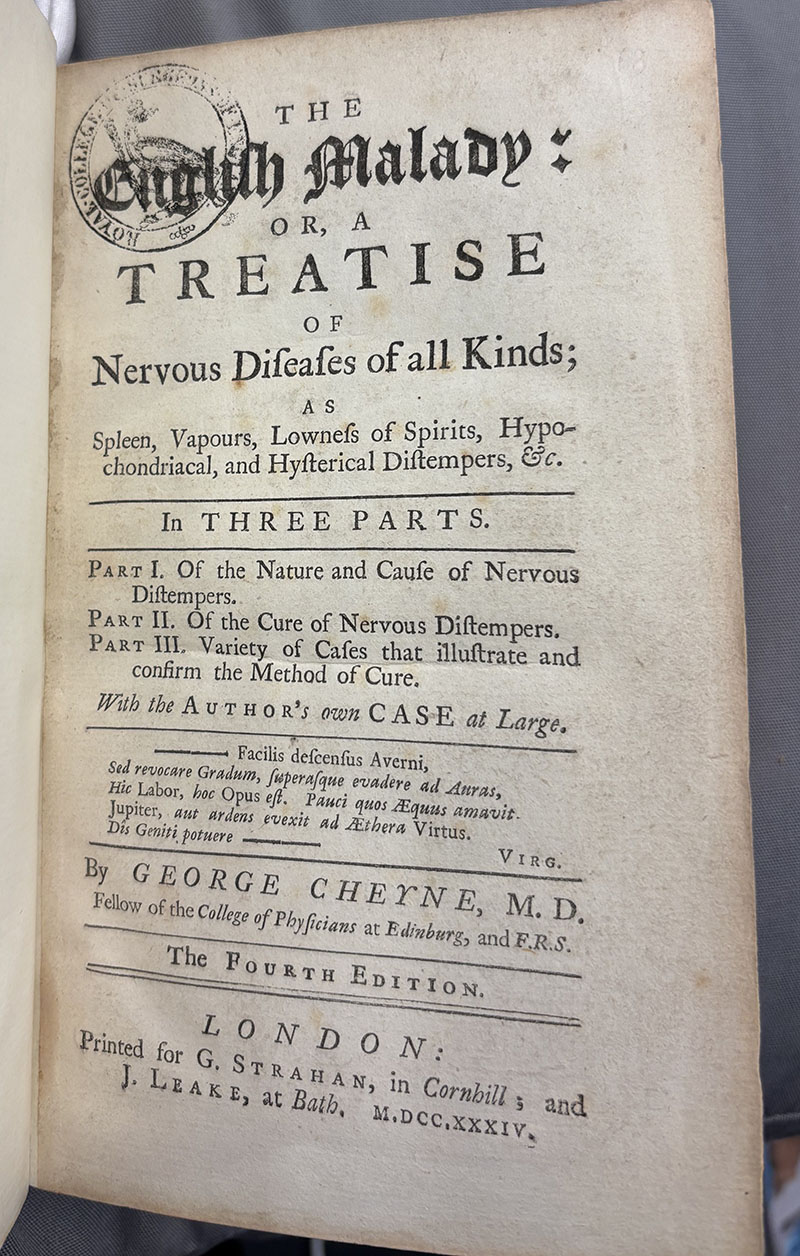
From James Cheyne’s A Treatise of Nervous Diseases of All Kinds (1733).
In many ways, neurasthenia is the product of bringing together existing theories of the nervous system with socially-situated concerns that were pertinent at the time. Beard and his contemporaries specifically identified this as a disease of modernity: “It is a malady that has developed mainly during the last half century.” The consensus here was that the demands of newly industrialised and urbanised environments created the conditions for neurasthenia. Rapid social and economic shifts post-Civil War and rapid advances in technology, such as railways and telegraphs, were drains on nervous energy. It was theorised that prolonged nervous depletion would sap vital energy needed for the optimal function of organs and bodily systems. This, in turn, gave rise to the broad scope of mental and physical symptoms that fell under the umbrella of neurasthenia.
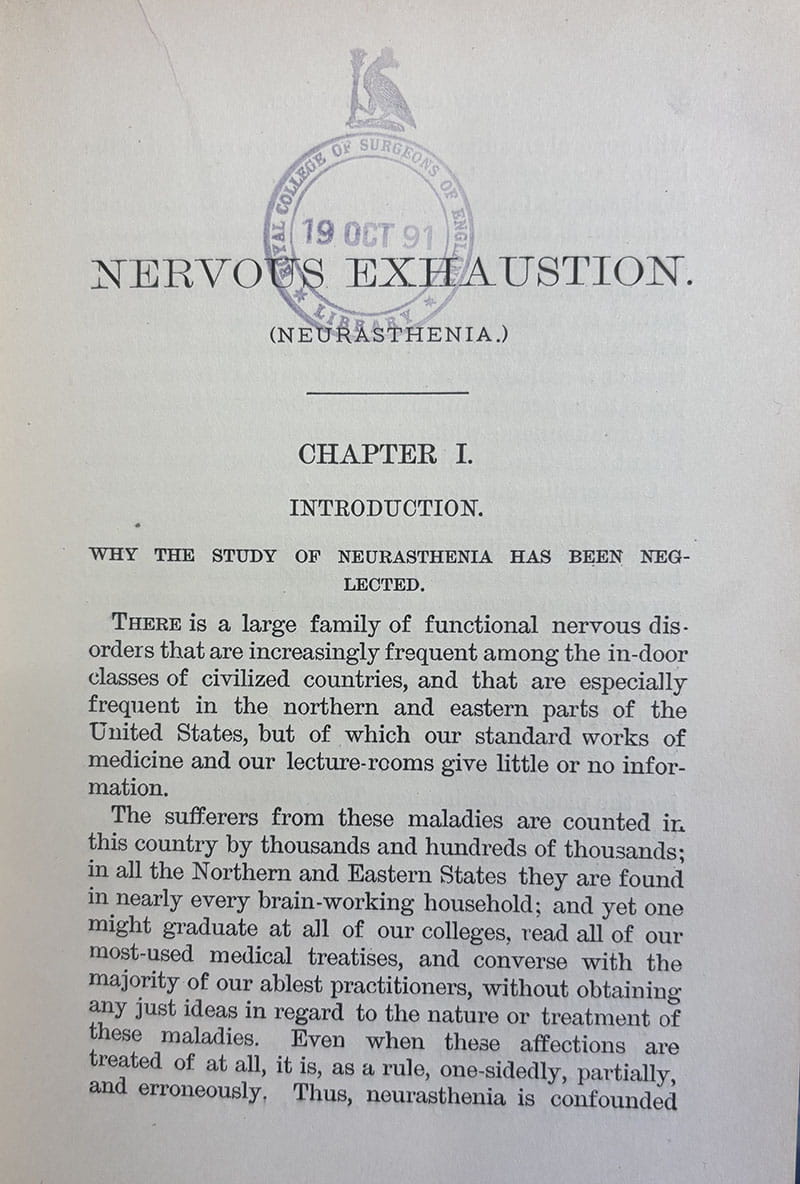
From George Miller Beard’s “A practical treatise on nervous exhaustion (neurasthenia): its symptoms, nature, sequences, treatment” (1890).
Neurasthenia was ostensibly a disease of modern life, but it was also tied up in the class and gender dynamics of the period. Much of our understanding of this episode in medical history comes from the writings and lives of foremost neurologists like Beard, Weir and their contemporaries in the American Neurological Association. Their perspectives are skewed toward the realities of the wealthy, urban and elite. Their earliest writings gave the impression of a disease that primarily afflicted the “civilised” upper classes, or striving urban middle classes.
Within this period-specific medical discourse around neurasthenia, middle- and upper-class women were particularly cited as its archetypal sufferers. Within our collections, Weir’s 1885 lecture series Diseases of the nervous system, especially in women, emphasised this. In Lecture 1, “The Paralyses of Hysteria”, he specifically singles out “upper classes” as presenting with larger numbers of “hysterical loss of power”. He singles out two groups of women as being particularly at risk, the first being afflicted by “the daily fret and wearisomeness of lives which, passing out of maidenhood, lack those distinct occupations and aims” and the second more common group “is to be met with among young persons who frequent the colleges for women”. The nineteenth-century middle to upper-class woman faced a conundrum. She invited nervous disorder by remaining in a passive, domestic role within the rigid expectations of respectable society. She equally invited nervous disorder by trespassing out of this feminine ideal toward an intellectual life or education. The implication here is that women were predisposed to mental and behavioural conditions through some innate defect of body and mind. Similar presumptions have been seen throughout the history of medicine, most notably in the diagnosis of hysteria. This trope echoed through the nineteenth century. Given that neurasthenia’s scope was both vague and broad, it seems logical that in later years the medical establishment would abandon it in favour of subsequent knowledge, such as Freud’s psychoanalytical model. What it does provide us with is a rich insight into the social context of this period, along with the moral values of the physicians who treated these patients.
These gendered perceptions and class distinctions did not end with diagnosis; they were also embedded in the therapeutic regimes prescribed for neurasthenic patients. Modern scholars have shown that neurasthenic diagnosis was somewhat democratised in the decades following its popularisation. This means the working classes and men were also diagnosed as neurasthenic with some frequency. Many physicians promoted electrotherapy as a means of restoring patients. In his 1887 treatise Certain Symptoms of Nervous Exhaustion, George Miller Beard asserts, “Electricity in the general and central methods of application is one of the very best of remedies for this form of nervous disease”. Perhaps the most famous treatment for neurasthenia, however, was the rest-cure. As touched on earlier, it necessitated intellectual and physical inertia and was almost solely recommended for women. Men diagnosed with neurasthenia, by contrast, were more often prescribed work-cures, which encouraged productive labour, outdoor exercise, travel, and engagement with public life. The contrast between these treatments reveals how Victorian medicine interpreted the same condition through fundamentally different expectations of masculine and feminine behaviour. By the end of the century, there was increasing scepticism about the effectiveness of rest cures as medical knowledge hurtled forward again.

On shelf – books on diseases of the nervous system on site at the College.
At present, the up-to-date DSM-5 (Diagnostic and Statistical Manual of Mental Disorders, Fifth Edition) details approximately 300 distinct mental disorders. The first edition referenced only 106. Medical knowledge is constantly developing as new research, classification systems, and diagnostic criteria emerge. The disappearance of neurasthenia from modern neurology does not make it any less valuable to historians and medical practitioners. Instead, it reveals how medical knowledge evolves, offering a window into past understandings of mental health, illness, gender, and society. It also shows us how medical language can reinforce prevailing social expectations. It reminds us that science and medicine are both socially constituted.
Téa-Anya Earle, Information Assistant
Further reading
Gosling FG. Before Freud: Neurasthenia and the American medical community, 1870-1910. Urbana, University of Illinois Press; 1987 (cited 27 October 2026). https://archive.org/details/beforefreudneura0000gosl/page/4/mode/2up
McGrew FA. Neurasthenia and the rest cure. Journal of the American Medical Association. 1900 (cited 27 October 2026); 34(23): 1466-1468. https://jamanetwork.com/journals/jama/article-abstract/477358
Perkins Gilman C. The yellow wallpaper. 1892 (cited 12 October 2026). https://www.nlm.nih.gov/exhibition/theliteratureofprescription/exhibitionAssets/digitalDocs/The-Yellow-Wall-Paper.pdf
Schuster DG. Neurasthenia and a modernizing America. Journal of the American Medical Association. 2003 (cited 20 October 2026); 290(17), 2327-2328. https://jamanetwork.com/journals/jama/fullarticle/197572
Taylor RE. Death of neurasthenia and its psychological reincarnation: a study of neurasthenia at the National Hospital for the Relief and Cure of the Paralysed and Epileptic, Queen Square, London, 1870–1932. The British Journal of Psychiatry. 2001 (cited 12 October 2026); 179(6): 550-557. https://www.cambridge.org/core/journals/the-british-journal-of-psychiatry/article/death-of-neurasthenia-and-its-psychological-reincarnation/CBF3F9183ED6368E940BB0F0AB327482
From the RCS England Library collection
Beard GM. Certain symptoms of nervous exhaustion. 1887. Search Results for “Certain symptoms of nervous exhaustion” at Heritage Collections.
Beard GM. A practical treatise on nervous exhaustion (neurasthenia): its symptoms, nature, sequences, treatment. 1890. View A practical treatise on nervous exhaustion (neurasthenia) : its symptoms, nature, sequences, treatment at Heritage Collections.
Mitchell SW. Lectures on diseases of the nervous system, especially in women. 1885. Search Results for “Lectures on diseases of the nervous system, especially in women” at Heritage Collections.